Home / Completed Projects / Zero Emissions Fleet Transition Plan

Zero Emissions Fleet Transition Plan

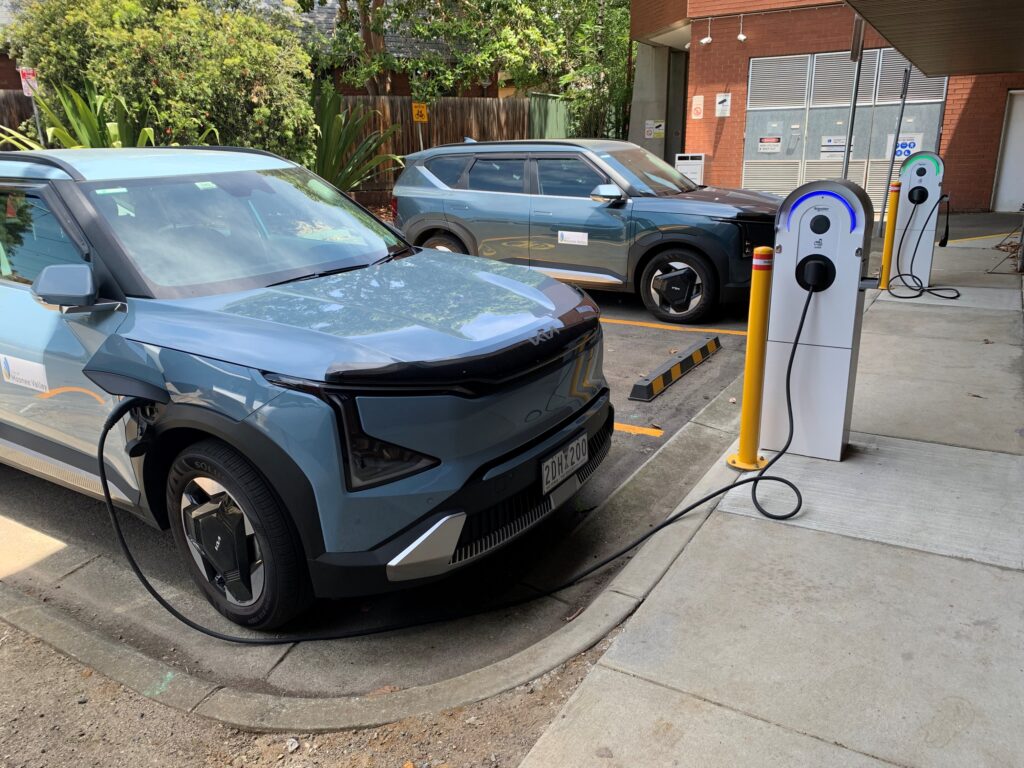
MVCC_EVs_charging_at_Civic

The Zero Emissions Fleet Transition Plan project delivered the collaboratively funded Zero Emissions Fleet Transition Plan for the Western Metropolitan Region of Melbourne in 2021.

The Zero Emissions Fleet Transition Plan project aimed to provide WAGA councils and the City of Greater Geelong with the evidence base to guide the incorporation of zero emission vehicles and electric vehicles into their fleets, with an insight into the underlying infrastructure requirements to accelerate this transition of fleets over the next 10 years. Ndevr Environmental Consultants were appointed to develop business cases for each council with an associated cost-benefit analysis and a summary transition plan report.


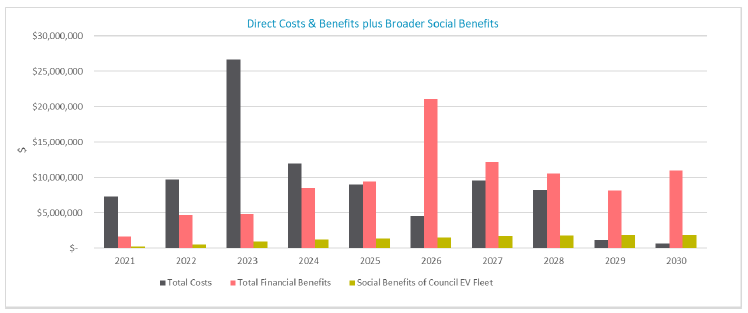
The report found a 10-year transition of light and heavy vehicles across the WAGA councils is estimated to have

  • A financial NPV in the order of -$6.9 million by 2030, presenting a financially unattractive project.
  • A social NPV is in the order of $1.5 million by 2030, presenting a financially attractive project based on both financial and social benefits.

It also noted that the NPV will improve through the transition as light commercial vehicles, particularly utes, and heavy vehicles become more readily available and price competitive with conventional alternatives.


The report recommended that WAGA councils undertake a full transition of their fleets to ZEVs using a stepwise transition rather than replacing all conventional vehicles in the fleet with ZEVs at once.  They recommended to target:

  • Vehicles as they are due for replacement, to reduce capital expenditure and for which there are fit-for-purpose alternatives available on the Australian market.
  • Light vehicles first, due to the higher turnover rate (kept for 3-5 years as opposed to heavy vehicles which are kept for 8-10 years) and because they are more readily available and price competitive.
  • Other fleet improvements while waiting for conventional fleet vehicles to be due for replacement or for fit-for-purpose vehicles to become more readily available in Australia, such as ensuring vehicles are the smallest fit-for-purpose vehicle possible, eco-driving and car travel as a last resort.

General and core actions to facilitate a ZEV transition for all WAGA councils included:

  • Develop internal Fleet Transition Plans following the recommendations in this report
  • Regularly update the costs of vehicles in the Business Case Calculator.xls spreadsheet (an output of the project) and revisit priorities every 1-2 years.
  • Measure and report on fleet performance
  • Monitor and manage utilisation of all vehicles, downsizing fleet where possible
  • Operator behaviour training
  • Implement change management principles
  • Liaise with fellow WAGA councils to identify savings through joint procurement and implementation.

Opportunities identified for financing the regional transition and their benefits included:
  • Year Due for Replacement-the most financially viable option since vehicles need to be replaced regardless.
  • Removing under-utilised vehicles
  • Revolving Green Fund
  • Joint Procurement- Councils can realise economies of scale when procuring the same resources together. Benefits need to be investigated on a vehicle-by-vehicle or charger-by charger basis.
  • Shared Services- Councils can explore shared services contracts for waste collection, street sweeping and similar services and using their collaborative buying power to partner with contractors to transition to ZEVs.
  • Federal and State Grants
 
If you would like to read the report, please request it from WAGA via the contact us page.
EV_Fleet_Costs_benefits

Acknowledgement of Country

The Western Alliance for Greenhouse Action (WAGA) respectfully acknowledges and recognises the Woiwurrung, Bunurong, Wadawurrung and Dja Dja Wurrung people of the Kulin Nation as the Traditional Custodians of the land on which we work and we pay respect to their Elders, past, present and future.